
What is refractive lens exchange?
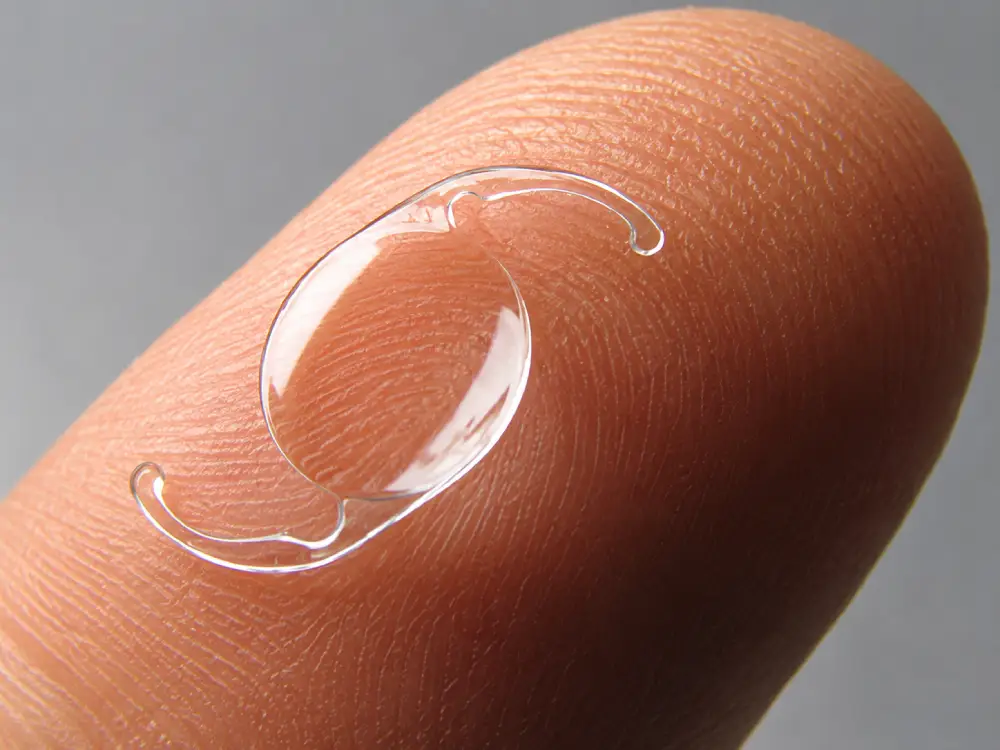
Refractive lens exchange (RLE), also called clear lens exchange, is a procedure in which the eye’s natural lens is replaced with an artificial intraocular lens implant to reduce dependence on glasses or contact lenses. It uses the same well-established technique as cataract surgery, but is chosen primarily to change the eye’s focus rather than to treat a cataract.
When refractive lens exchange may be considered
RLE may be an option for suitable adults — often those in their 40s and beyond — who are long-sighted, short-sighted or becoming increasingly reliant on reading glasses, and who may not be ideal candidates for laser vision correction. Suitability depends on a careful assessment of your eyes, prescription and expectations, which is why an individual consultation is essential.
Your consultation
At your consultation, Miss Paul will assess your eye health and take detailed measurements, review your prescription and lifestyle, and discuss what RLE can and cannot achieve for you. This ensures the treatment is appropriate and that you have realistic expectations before deciding whether to proceed.
Your treatment
RLE is usually performed as a day case under local anaesthetic. Through a small incision, the natural lens is removed and a chosen intraocular lens implant is placed in its position. Each eye is normally treated on a separate occasion, and the procedure typically takes around 15–30 minutes per eye.
Lens options
As with cataract surgery, several types of lens implant are available, including monofocal, extended-depth-of-focus and trifocal lenses, each offering a different balance of distance, intermediate and near vision. The right choice is individual to you; the guide below compares the main options.
Recovery
Vision often begins to improve within a few days, but recovery varies between individuals and can continue to settle over several weeks. Eye drops are usually prescribed for a period afterwards, and you will be given advice on activities to avoid while the eyes heal, with follow-up appointments to monitor progress.
Risks and complications
RLE is generally safe, but as with any eye surgery there are risks, which can include inflammation, infection, raised eye pressure or the need for further treatment, and — as with cataract surgery — later clouding of the membrane behind the lens, which is easily treated with laser. Not everyone will achieve complete freedom from glasses. Miss Paul will discuss the risks and realistic outcomes relevant to your eyes.
Why choose Miss Anita Paul
Miss Anita Paul brings extensive experience in lens-based surgery and a considered, honest approach to suitability and expectations. Your care is consultant-led throughout, with clear guidance so you can decide whether refractive lens exchange is the right choice for you.